Water Damage at Home?
Find Restoration Help.
Unexpected flooding, burst pipes, and water intrusion can cause serious property damage quickly. Connect with participating restoration professionals who may be able to help with extraction, rapid drying, and structural cleanup.
Service availability varies by location and independent provider schedule.
Common Water Damage Situations Handled
Water travels quickly through flooring, drywall, and subflooring. Early intervention is critical to limit structural deterioration.
Burst & Freezing Pipes
Ruptured supply lines inside walls, ceilings, or crawlspaces releasing high-pressure water.
Appliance Overflow & Leaks
Washing machine line ruptures, dishwasher pump failures, and failed water heater tanks.
Flooded Finished Rooms & Basements
Groundwater intrusion, sump pump failure, or storm runoff flooding carpets and living areas.
Sewer & Drain Backups
Blackwater backups from municipal or septic lines requiring specialized hazardous sanitization.
Roof & Storm Infiltration
Wind-driven heavy rain entering through damaged flashing, shingles, or exterior windows.
Ceiling & Drywall Saturation
Overhead bathroom leaks causing sagging sheetrock, damaged insulation, and pooling water.
What Restoration Professionals May Do
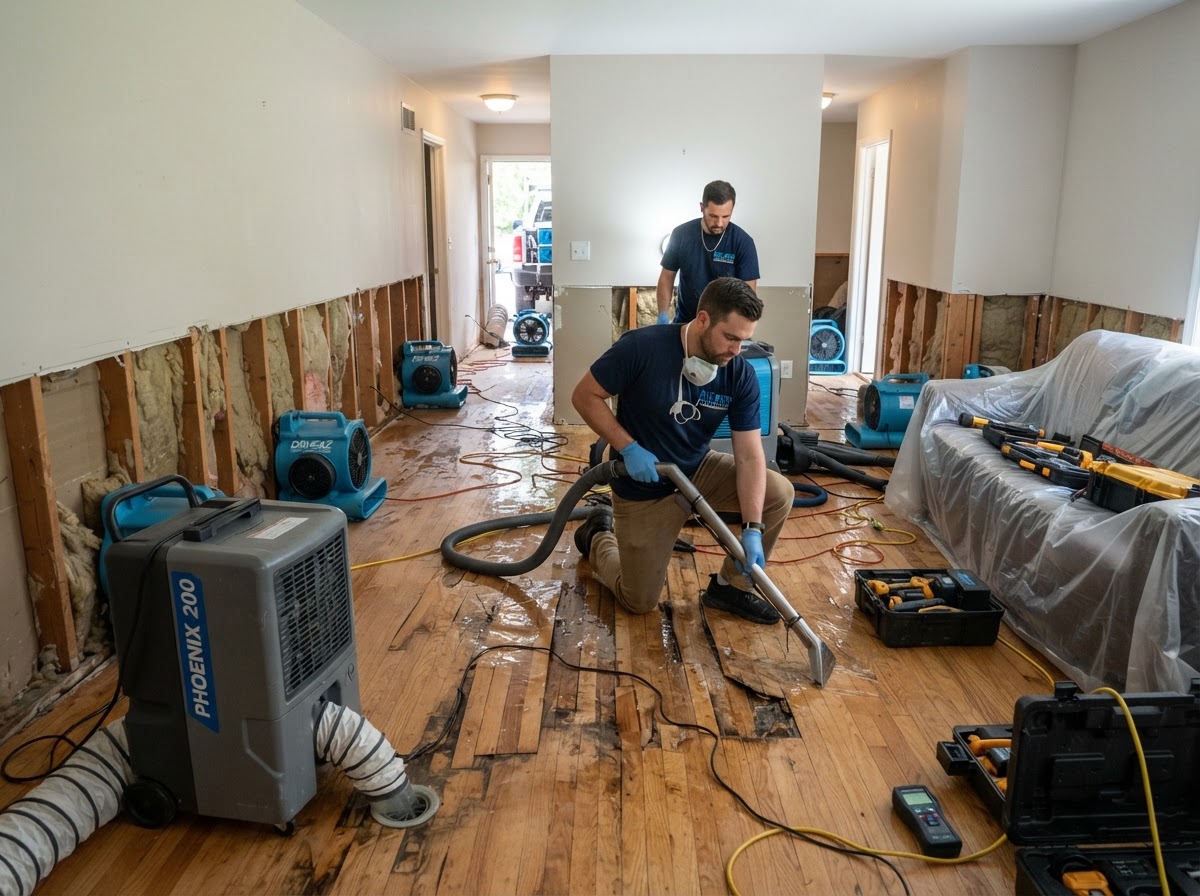
Restoration specialists utilize industrial extraction and drying equipment designed to draw moisture from deep within structural building materials.
What to Do While Waiting for Help (Safety First)
Recommended Safe Actions:
- Shut off the main water shutoff valve if safe to access.
- Move delicate rugs, artwork, and paper documents to a dry room.
- Wipe excess water from wooden furniture surfaces.
- Prop up wet upholstery cushions for even air drying.
Do NOT Attempt:
- Do not enter rooms with standing water if electricity is still active.
- Do not operate regular household vacuum cleaners on wet carpets.
- Do not walk on sewage or contaminated blackwater.
- Do not use ceiling fixtures if water has leaked into ceilings.
Water Damage Restoration FAQs
How quickly should water damage be addressed?
Water damage should ideally be mitigated within the first 24 to 48 hours. Beyond this timeframe, untreated drywall and carpets can begin harboring mold spores, and wooden structures may warp.
Does homeowners insurance cover water damage?
Many standard policies cover sudden and accidental water damage (such as burst frozen pipes or washing machine supply hose failure), while gradual leaks or external floods may require specific riders or flood insurance. Check with your insurance carrier directly.
Can water damage lead to mold?
Yes. Mold spores are naturally present in indoor air and require moisture, warmth, and organic food (such as cellulose in drywall or wood) to grow. Fast structural drying is the most effective preventative measure.
How long does professional structural drying take?
Depending on the category of water and materials affected, professional drying typically takes between 3 to 5 days using commercial dehumidifiers and high-velocity air movers.
Need Water Extraction & Drying Assistance?
Speak with a representative to route your inquiry to an independent water damage specialist.