
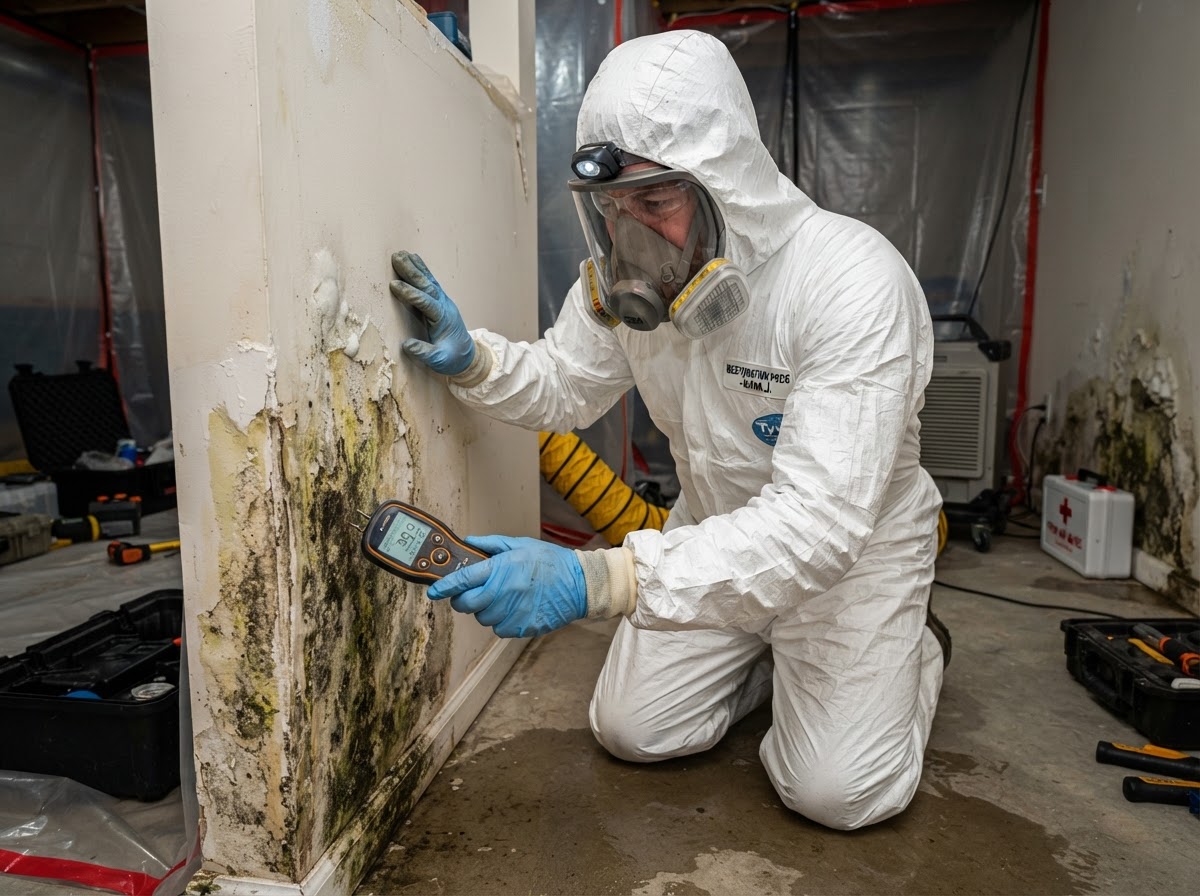
Concerned About Mold?
Connect With a Professional.
Whether you've noticed visible mold growth, recurring musty odors, or moisture damage following a plumbing leak, connect with independent professionals who can discuss inspection, containment, and remediation options.
Understanding Residential Mold & Moisture
Common Signs of Hidden Moisture
- Persistent earthy or musty smells that do not clear with open windows.
- Dark spots, velvety patches, or discoloration along baseboards and bathroom drywall.
- Peeling, bubbling wallpaper or paint indicating trapped moisture in walls.
- Past roof leaks, attic condensation, or foundation water infiltration.
Why Source Correction Matters
Remediation without fixing the underlying water or humidity source is only temporary. Qualified providers focus on identifying where moisture is originating—whether a slow pipe drip, poor ventilation, or elevated indoor humidity.
Note: CallEmergencyNow does not promote alarmist health claims. We advocate measured professional assessment.
Mold Remediation Questions
What is the difference between inspection and remediation?
An inspection assesses moisture levels, visual extent, and may include environmental air/surface sampling. Remediation is the physical containment, HEPA air filtration, removal of contaminated porous items, and antimicrobial cleaning of the affected area.
Can I just bleach the mold myself?
While bleach can remove cosmetic surface stains on non-porous tiles, it does not penetrate porous materials like drywall or wood subfloors and adds unnecessary moisture. For areas larger than 10 sq ft, EPA guidelines recommend professional containment.